


زبان: انگلیسی
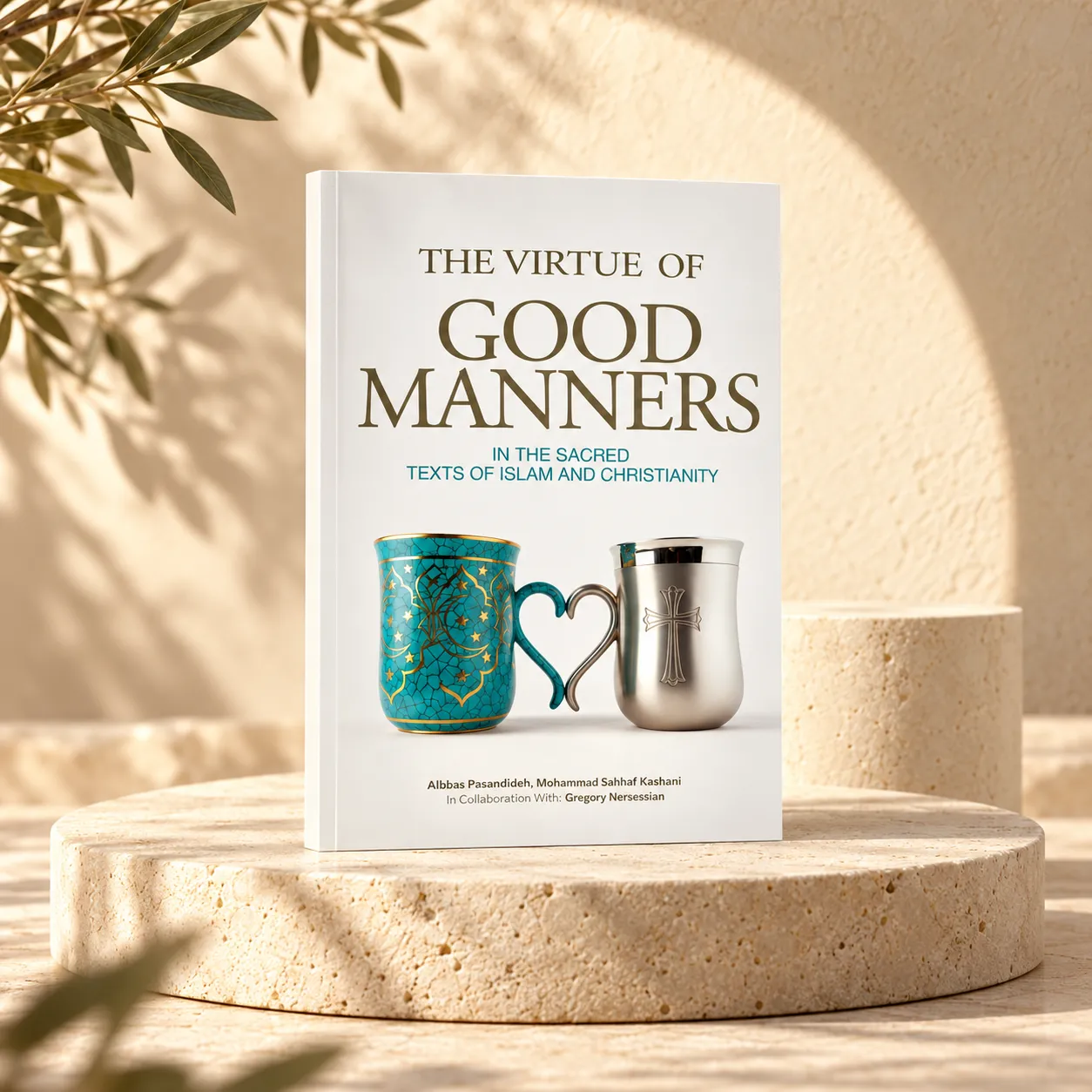
The Virtue of Good Manners
اثری دربارهٔ خوشخویی و رفتار اخلاقی در اسلام و مسیحیت؛ با رجوع به قرآن، سنت و کتاب مقدس و تمرکز بر روابط انسانی در زندگی روزمره.
مطالعهٔ تطبیقی
اسلام و مسیحیت
تقویت گفتوگو
میان ادیان
ارزشهای اخلاقی
در زندگی روزمره
نویسندگان
محمد صحاف کاشانی، عباس پسندیده
همکار علمی
گریگوری نرسیسیان
زبان
انگلیسی
صفحات
۳۰۷ صفحه
کتاب «فضیلت خوشاخلاقی در متون مقدس اسلام و مسیحیت» به بررسی خوشخویی و نقش آن در رفتار روزمره و روابط انسانی میپردازد.
کتاب در دو بخشِ اسلام و مسیحیت و در مجموع دوازده فصل تنظیم شده است. ماهیت و آثار خوشخویی، مدارا و انعطافپذیری، گشادهرویی و گفتار نیک، شادی و شوخطبعی، انصاف و کنترل خشم، محورهای اصلی آناند. نویسندگان با مراجعه به قرآن و سنت و نیز کتاب مقدس، این موضوعات را در دو سنت دینی بررسی میکنند.
این اثر نوشتهٔ عباس پسندیده و محمد صحاف کاشانی، با همکاری گریگوری نرسیسیان است و در سال ۲۰۲۶ توسط Canadian International Publishing Group (CIPG) منتشر شده است.
هدف آن فراهمکردن زمینهای برای تأمل اخلاقی و گفتوگوی علمی میان اسلام و مسیحیت، با تمرکز بر بهبود روابط انسانی است.

Introduction11
Foreword by Reverend Grigorios Nersisyan19
Introduction (Good Manners in Islam and Christianity)23
Chapter One: The Nature of Good Character and its Effect in the Sacred Texts of Islam31
1. The Meaning and Position of Good Character33
2. The Value and Status of Good Character35
3. The Role of Good Character in Life39
4. The Mechanism of the Effect of Good Character on Social Relations41
A. Expanding the Sphere of Relations42
B. Facility of Interaction43
C. The Beauty of Interaction45
5. The Behavioral Manifestations of Good Character46
Chapter Two: Social Flexibility in the Sacred Texts of Islam49
1. Rifq and Flexibility53
A. Rifq and Flexibility in the Family54
B. Gentleness in Religious Practice58
2. Forbearance and Flexibility61
A. The Necessity of Forbearance in Life61
B. The Roots of Forbearance62
C. Forbearance and Prophethood64
D. The Effects of Forbearance66
3. The Limits of Gentleness and Forbearance69
Chapter Three: Cheerfulness and Pleasant Speech in the Sacred Texts of Islam71
1. Cheerfulness71
A. Cheerfulness as a Social Skill74
B. The Effects of Cheerfulness75
C. The Cheerfulness of the Prophet of Islam76
2. Pleasant Speech81
A. Characteristics of Good Speech84
B. Avoidance of Foul Speech88
C. The Manner of the Prophet’s Speech90
Chapter Four: Joy and Humor in the Sacred Texts of Islam95
Introduction95
1. Joy from an Islamic Perspective96
Paradise: The Home of Joy98
2. Planning for Joy100
A. The Five-Part Model100
B. The Four-Part Models100
C. The Three-Part Models102
3. What is the Psychological Function of Joy?104
A. Mental Repose and Relief105
B. Composing Psychic Energy (Istijmām)106
C. Psychic Expansion (Basṭ / Nushrah)107
D. Preparedness and Capability (ʽAwn / Istiʽānah / Qudrah)107
4. Pleasure and Joy108
A. The Pleasure of Movement and Exercise109
B. The Pleasure of Touch110
C. The Pleasure of Sight111
D. The Pleasure of Eating and Drinking112
E. Sexual Pleasure114
F. The Pleasure of Cleanliness114
G. The Pleasure of Interaction120
H. The Pleasure of Pleasant Scents122
I. The Pleasure of Humor123
J. The Pleasure of Laughter124
k. The Conditions for Material Pleasure126
5. Humor139
6. Laughter and Smiling140
7. The Application of Vitality in Life143
A. Guidance144
B. Worship144
Conclusion147
Chapter Five: Fairness in the Sacred Texts of Islam149
Introduction149
1. The Nature of Fairness151
2. Fair Behaviors153
A. Acceptance of Truth153
B. Congruence in One’s System of Preferences and Aversions153
3. The Difficulty of Fairness160
A. Fairness Toward the Unfair161
B. Fairness Regarding Family162
4. The Consequences of Fairness163
A. The Salvation of Society163
B. The Improvement, Consolidation, and Expansion of Relationships164
C. Social Credibility165
D. Countering the Corruption of Power166
E. Psychological Comfort169
5. Cultivating the Virtue of Fairness169
A. The Essential Factor170
B. Facilitating Factors171
Chapter Six: Anger and Its Control in the Sacred Texts of Islam175
Introduction175
1. The Meaning and Context of Anger176
2. Blameworthy Anger177
A. The Consequences of Blameworthy Anger178
B. Instigating Factors of Anger184
C. Countering Blameworthy Anger186
D. Countering the Negative Anger of Others201
Chapter One: Good Character in the View of the Sacred Texts of Christianity211
1. Conceptual Analysis of the Hebrew and Greek Roots213
2. The Fundamental Value and Position of Good-temperedness214
3. Behavioral Manifestations of Good-Temperedness216
A. Forbearance, Flexibility, and Patience216
B. Fairness217
C. Joy and Humor217
D. Cheerfulness and Kind Speech218
E. Control of Anger218
Chapter Two: Flexibility in the Sacred Texts of Christianity221
1. Conceptual Analysis221
2. The Theological and Ethical Necessity of Flexibility222
3. The Arenas of Flexibility223
A. Flexibility Toward God223
B. Flexibility Toward Enemies223
C. Forbearance with Fellow Believers224
D. Forbearance with the Deprived and the Lowly225
E. Forbearance with All Classes of People225
4. The Consequences of Flexibility and Forbearance226
A. The Divine Promise: The Life-Giving Fruits of Forbearance226
B. The Divine Warning: The Dangers of an Inflexible Spirit228
Conclusion230
Chapter Three: Cheerfulness and Kind Speech in the Sacred Texts of Christianity231
1. Cheerfulness in the Holy Bible231
A. Etymology of Cheerfulness232
B. Joy as a Fruit of the Spirit and a Divine Command233
C. The Contexts of Cheerfulness233
D. The Effects of Cheerfulness235
E. Jesus Christ as the Model of Cheerfulness236
2. Kind Speech in the Holy Bible237
A. Etymology of Kind Speech238
B. Characteristics of Goodly Speech in Christianity238
C. The Boundaries of Speech: Avoiding Foul and Destructive Language240
D. The Perfect Model of Kind Speech241
Final Chapter Summary242
Chapter Four: Joy and Humor in the Sacred Texts of Christianity245
1. The Concept of Joy and Humor in the Holy Bible245
2. The Origin of Joy in the Holy Bible246
A. Joy as a Fruit of the Holy Spirit246
B. Joy in the Presence and Word of God247
C. Joy Arising from Salvation and Redemption247
D. Joy in the Hope of Eternity248
3. The Function and Ethical Framework of Joy249
4. Cultivating Joy251
5. The Ethical Framework of Joy253
A. The Principle of Balance Between Joy and Sorrow253
B. The Principle of Not Mocking254
Conclusion255
Chapter Five: Fairness in the Sacred Texts of Christianity257
1. Conceptual Analysis of Fairness in the Testaments257
2. The Importance of Fairness from the Biblical Perspective258
A. God, the Source of Fairness258
B. Fairness as a Divine Command and Prophetic Mission260
C. Fairness in the Age of the Promised Savior261
D. The Realization of the Ideal of Fairness in the Person of Jesus Christ262
3. Behavioral Manifestations and Examples of Fairness in the Holy Bible263
A. Fairness in the Public and Legal Sphere264
B. Fairness in the Social and Economic Sphere266
C. Fairness in the Personal and Relational Sphere268
D. Fairness in the Theological and Eschatological Sphere270
E. The Fruits of Fairness271
F. The Consequences of Injustice275
Final Summary of the Chapter280
Chapter Six: The Control of Anger in Christian Sacred Texts283
1. A Conceptual Analysis of Anger283
2. The Roots and Destructive Consequences of Anger285
A. Anger as the Fountainhead of Sin and Iniquity285
B. Anger as a Sign of Folly286
C. From the Acts of the Sinful Nature286
D. A Catalyst for Strife and Conflict287
E. A Breach in the Fortress of the Self288
F. The Creation of Bitterness and Malice288
3. Root Cause Analysis of Anger289
4. Methods for Controlling Anger289
A. Spiritual Foundation: Cultivating Inner Strengths290
B. Behavioral Discipline290
C. The Use of Reason and Wisdom292
5. How to Confront the Anger of Others293
Final Conclusion294
Bibliography297